Art Symbolism and Imagery Inspired by Urban Ruben
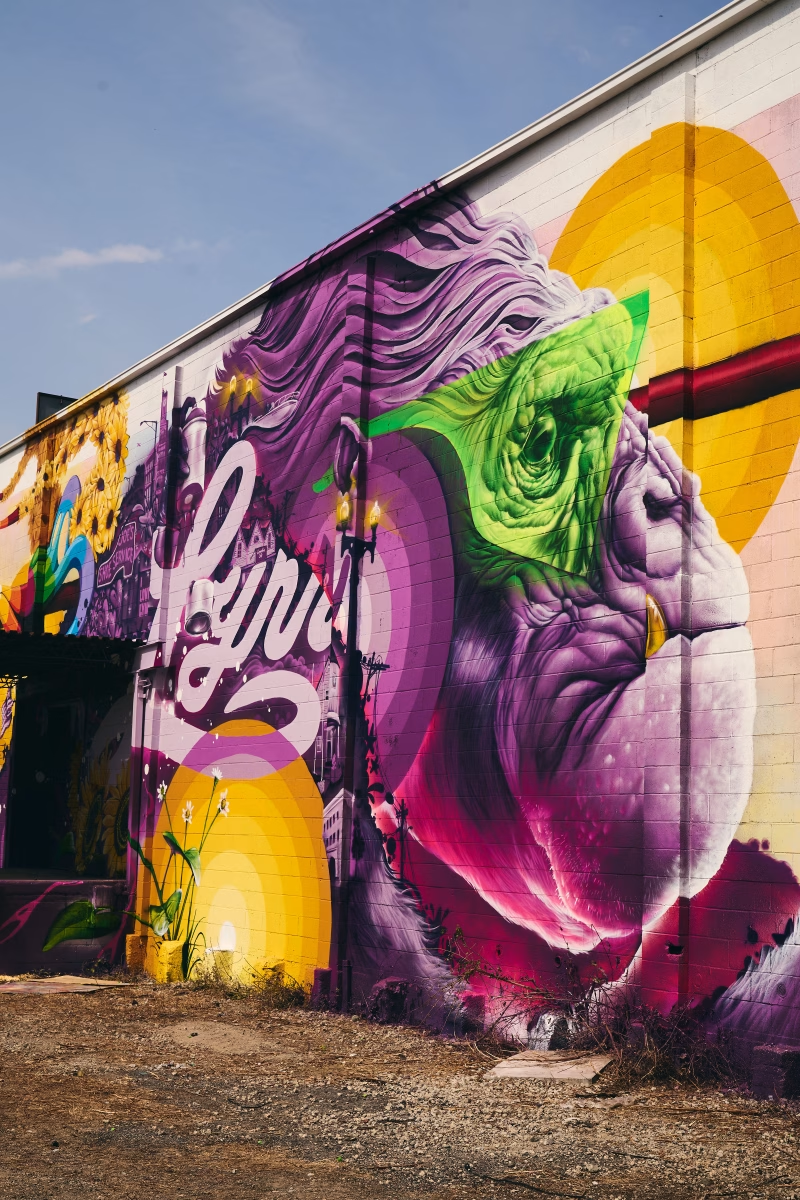
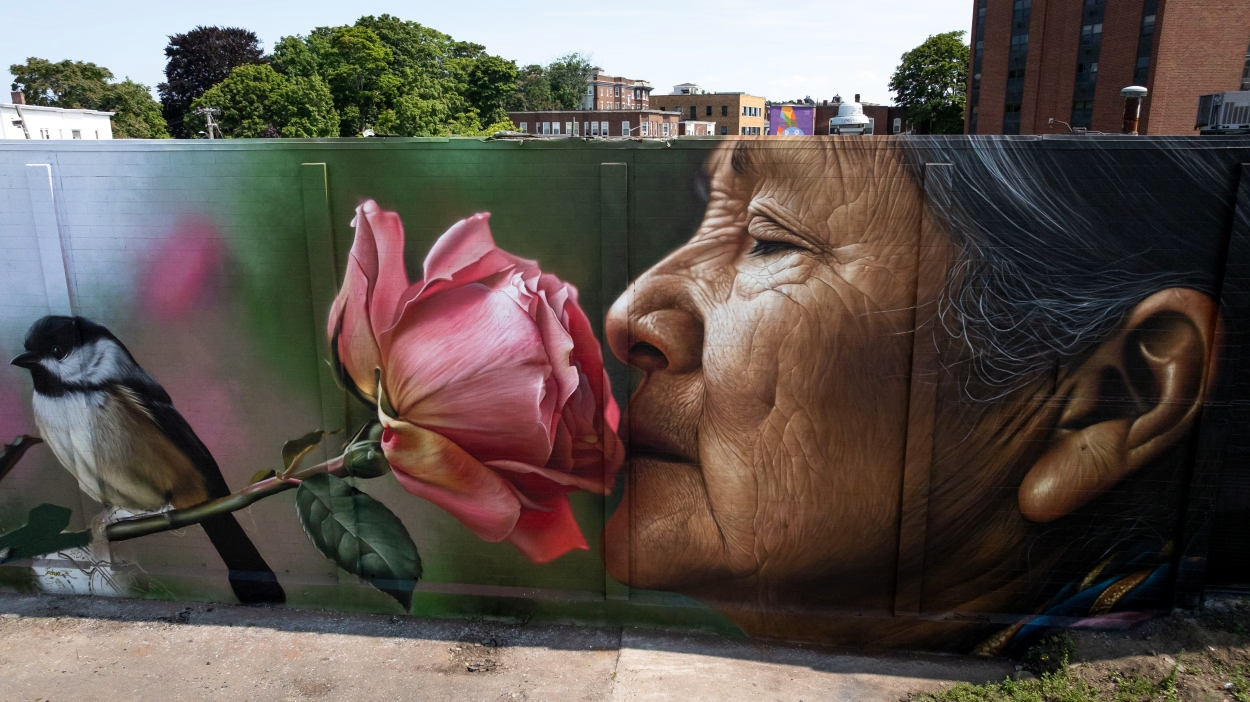
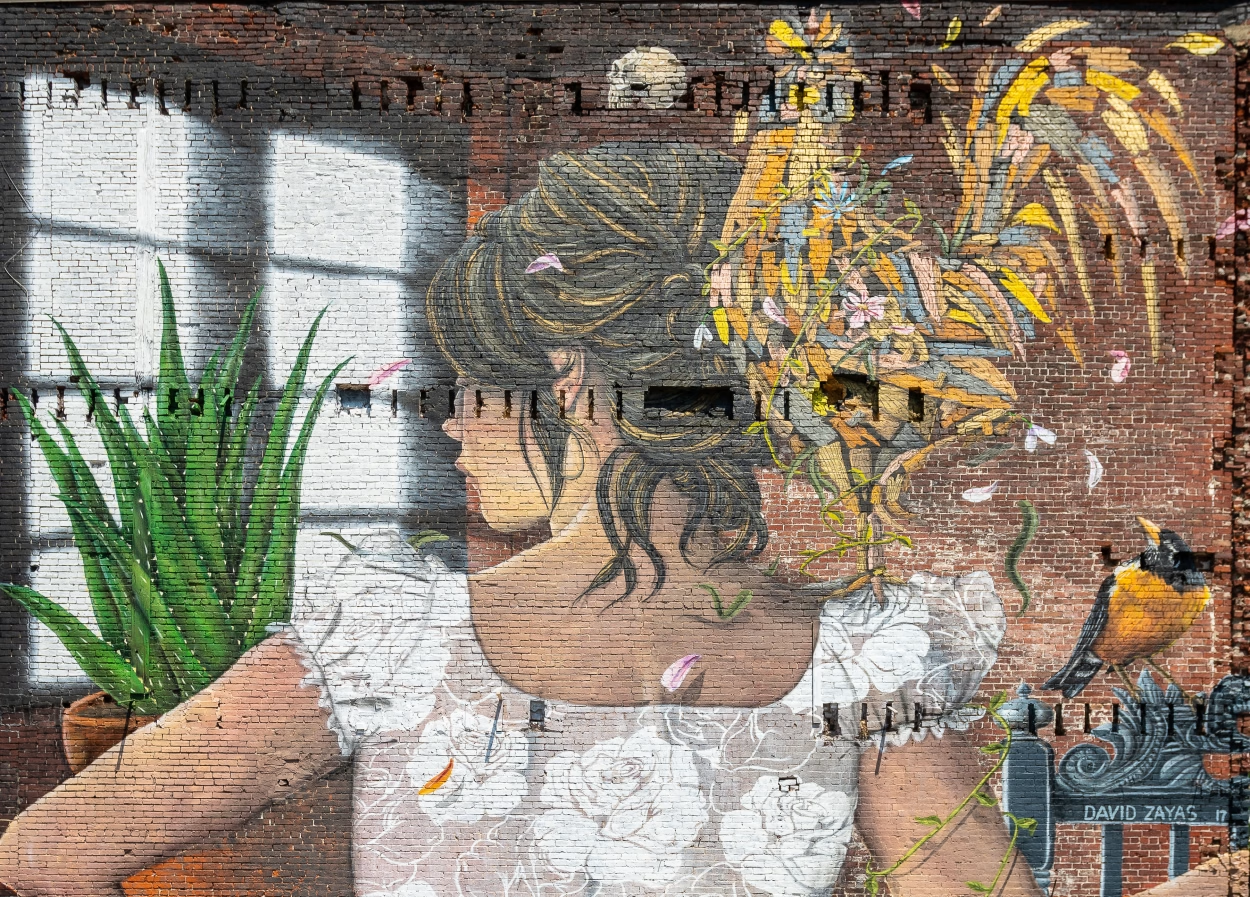
Explain what symbols/imagery should appear in your art?
Jump to section
Key Indicators
Create – Conceiving and developing new artistic ideas and work.
Respond – Understanding and evaluating how the arts convey meaning.
Present – Interpreting and sharing artistic work.
Connect – Relating artistic ideas and work with personal meaning and external context.
Learning Objectives
Students will be able to…
- Explain what symbols/imagery should appear in your art?
Standards
- F.V.Cr.02. – Organize and develop artistic ideas and work. Develop multiple plans for producing a piece of artwork prior to selecting one.
- F.V.R.08. – Interpret intent and meaning in artistic work. Identify specific elements in a work that connect it to a specific genre or style.
- P.V.P.04. – Select, analyze and interpret artistic work for presentation. Explain how specific techniques were used to evoke, express, or communicate in an artistic work or collection.
- A.V.Co.10. – Synthesize and relate knowledge and personal experiences to make art. Explain the development of a personal aesthetic vision as a visual artist and how it is represented in a specific piece or collection.
Content & Topics
Symbolism
Materials
SKETCHBOOKS: what images could you add to your artwork that enhances your message?
Vocabulary
- COLOR THEORY: mystery and magic.
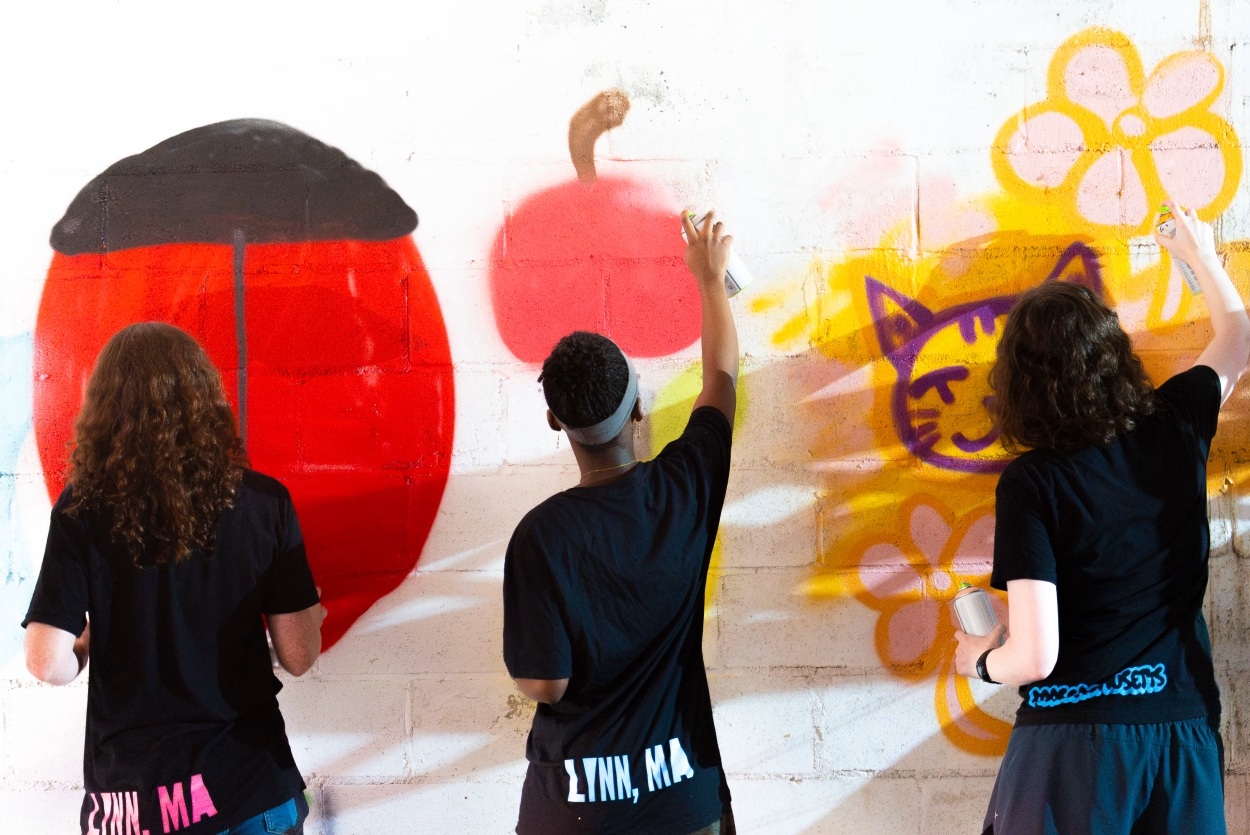
- IMAGERY: Lynn focused.
- SYMBOLISM: love and fear.
Procedures
Day 1 – Brainstorming & Mind Mapping
Objective (SWBAT): Create a mind map/brainstorm of ideas that connect to
their intended project message.
- Introduction (5–10 min)
- Teacher reminds students of the big picture: they will spend three days developing ideas before beginning their final project.
- Share prompts to guide brainstorming: What do I care about? What do I want to say through my art? What symbols/images could represent that idea?
- Guided Brainstorm (10–15 min)
- Teacher models a quick mind map on the board with a central theme (e.g., “community,” “identity,” “climate change”) and connected branches.
- Students begin their own mind maps in sketchbooks, focusing on words, quick doodles, and personal connections.
- Independent Work (20–25 min)
- Students expand their mind maps with related imagery, emotions, and potential symbols.
- Encourage at least 2–3 sub-branches per main idea.
- Wrap-Up/Exit Ticket (5 min)
- Share one idea from their mind map with a partner.
- Teacher collects quick check: Write down the central theme of your project in one sentence.
Day 2 – Artist Research & Thumbnail Sketching
Objective (SWBAT): Document artist research and create thumbnail sketches inspired by their brainstorming.
- Introduction (5–10 min)
- Review the purpose of research in art: to find visual inspiration and learn from other artists’ approaches.
- Present 2–3 example artists connected to students’ themes (could be drawn from street art, contemporary muralists, or other relevant genres).
- Research Activity (15–20 min)
- Students use provided books, articles, or digital resources to find at least two artists whose work relates to their theme.
- Students document:
- The artist’s name.
- 1–2 images that inspire them (printed, sketched, or digital screenshots).
- A sentence about how the artist’s work could connect to their project.
- Thumbnail Sketching (15–20 min)
- Teacher demonstrates what a thumbnail sketch looks like (small, simple drawings to test out imagery).
- Students create 6–8 quick thumbnail sketches of imagery, symbols, or compositions related to their theme.
- Encourage exploration, not perfection—stick figures and outlines are fine.
- Wrap-Up (5 min)
- Pair-share: Show one thumbnail sketch and explain its connection to research.
- Teacher checks research documentation and thumbnails for completion.
Day 3 – Composition Sketches
Objective (SWBAT): Create composition sketches as preparation for their final project.
- Introduction (5–7 min)
- Teacher explains the difference between thumbnails and compositions: thumbnails are idea fragments, while compositions arrange imagery into a structured plan.
- Demonstrate using one thumbnail → expand into a full sketch with foreground, background, balance, and emphasis.
- Composition Sketching (25–30 min)
- Students select their best ideas from Day 2.
- Create 2–3 larger composition sketches in sketchbooks (half- or full-page).
- Encourage experimentation with:
- Placement of objects/figures.
- Scale changes.
- Overlapping and depth.
- Color notes or value shading for emphasis.
- Peer Feedback (10 min)
- Students form small groups (3–4).
- Each shares one composition sketch, receives two comments:
- What is working well visually?
- What could be pushed further or clarified?
- Wrap-Up (5 min)
- Students reflect in writing: Which composition feels strongest, and why?
- Teacher collects reflections to gauge readiness for moving into the final project.
* These three days are meant to scaffold idea development but can be
stretched if students need more time.
- The due date is 3 weeks from project start, so students have ample time to revise compositions before beginning their final pieces.
- Students who finish early may start refining their chosen composition or testing materials.
Differentiation
- Students can use any material that they are comfortable with
- Small group peer editing
- Art of Ed worksheets
Assessment
Formative Assessment (Day-to-Day Checkpoints)
These measure ongoing progress as students brainstorm, research, and sketch.
- Exit Ticket (Day 1 – Mind Mapping)
- Students write one central theme for their project in a single sentence.
- Teacher checks for clarity of idea and connection to symbols/imagery.
- Artist Research Documentation (Day 2)
- Students submit notes on at least two artists, including images and one explanatory sentence per artist.
- Teacher assesses whether students can connect professional examples to their own artistic goals.
- Thumbnail Sketches (Day 2)
- Students create 6–8 small thumbnail sketches testing symbols and imagery.
- Teacher looks for variety, experimentation, and links to brainstormed themes.
- Peer Feedback Participation (Day 3)
- Students share one composition sketch and give/receive feedback using sentence starters.
- Teacher records engagement and ability to use appropriate critique language.
Summative Assessment (End of 3-Day Cycle)
These measure readiness to move into the final project and the ability to apply skills from the lesson sequence.
- Final Composition Sketches (Day 3 Submission)
- Students submit 2–3 developed composition sketches in their sketchbook.
- Sketches must demonstrate:
- Use of imagery/symbolism aligned with their intended message.
- Experimentation with composition (foreground, background, balance, emphasis).
- Notes on color or value decisions.
- Written Reflection (Day 3 Exit Task)
- Prompt: Which composition feels strongest and why? How do your choices communicate your artistic message?
- Teacher evaluates depth of reflection and ability to explain artistic intent.
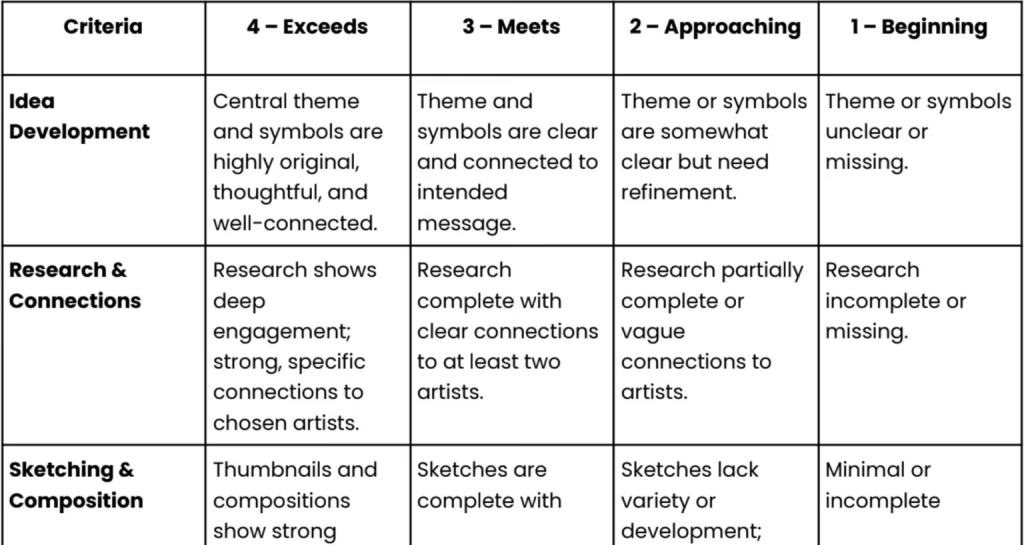
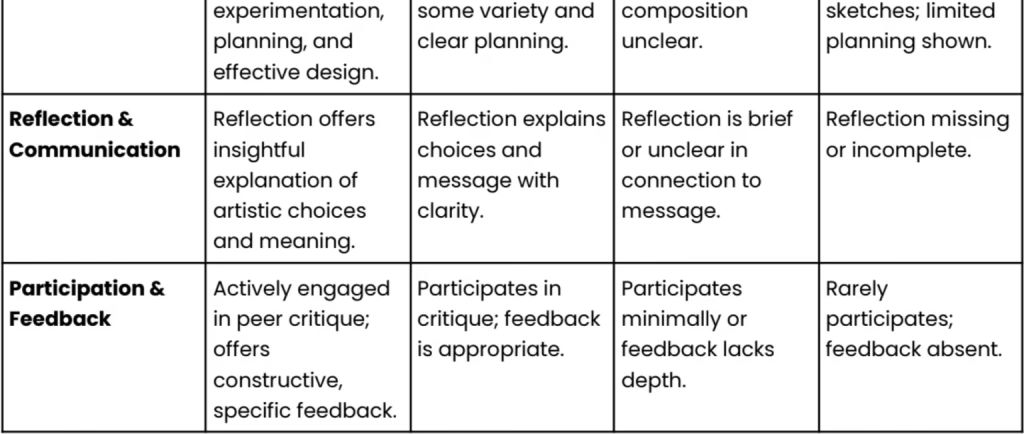
Rubric (4-Point Scale)
Resources
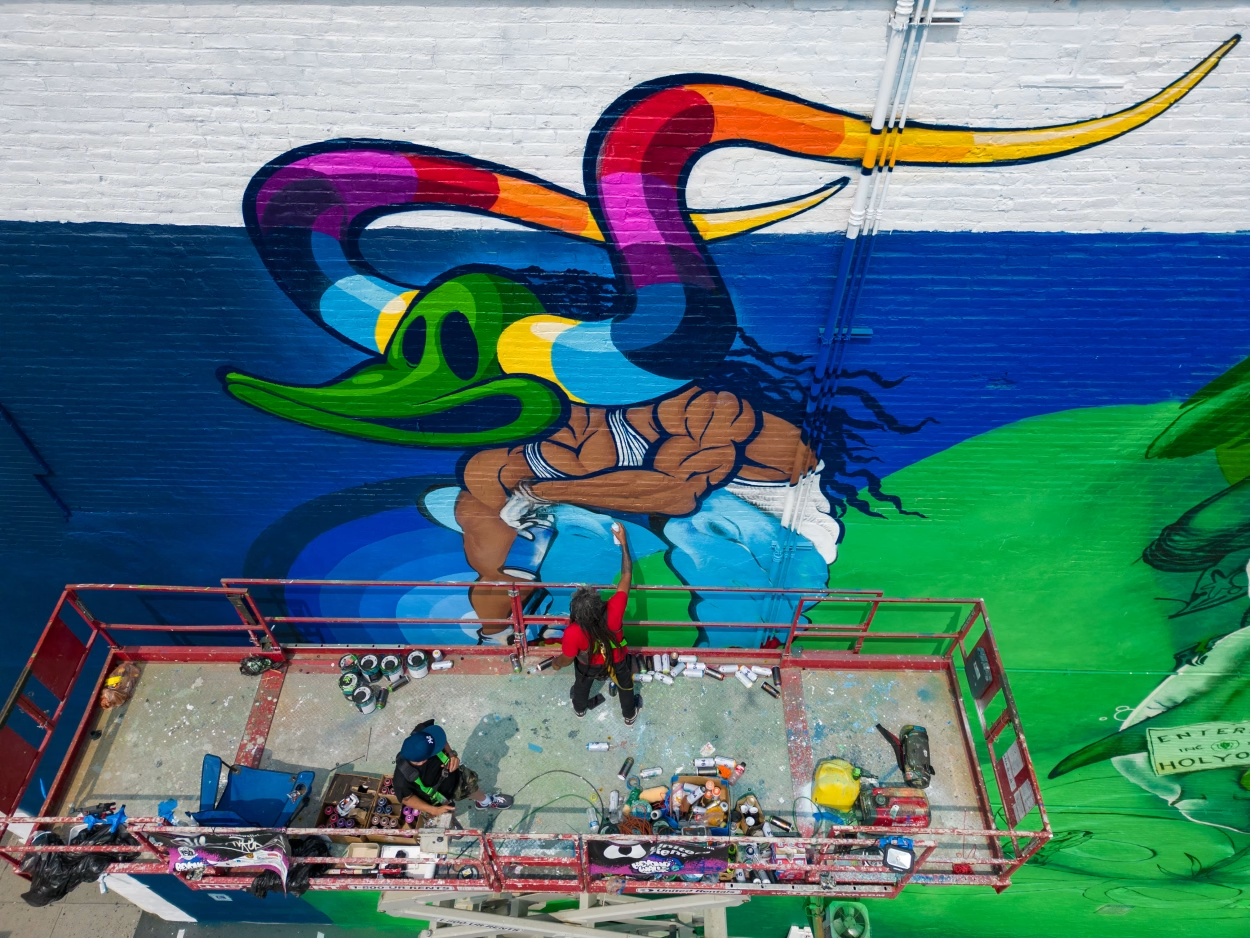
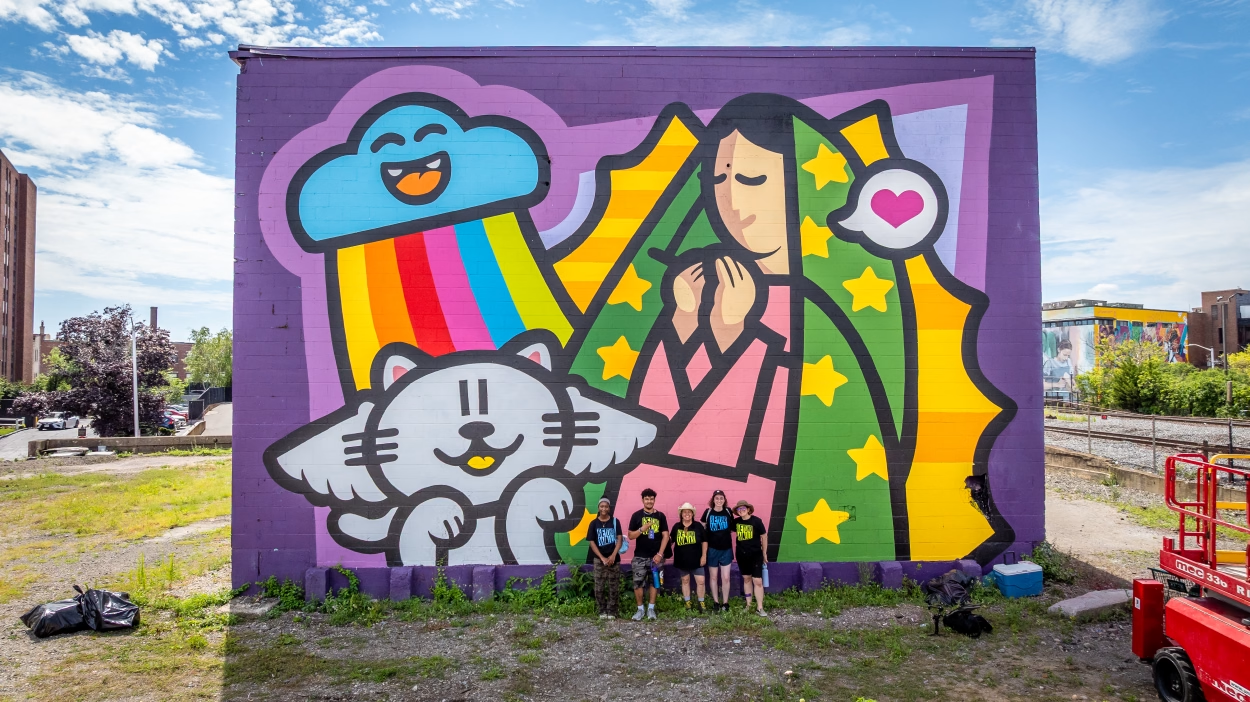
- RUBEN UBIERA Wall – 30 Silsby Street
- Art of Ed worksheets for color theory and thumbnails
Teacher Notes
What is the importance/ process of communication of imagery IN A WORK OF ART?